
A Neighborhood Born from Bowie’s Suburban Transformation
Heather Hills is one of the neighborhoods that helped turn Bowie from a small railroad-and-farming community into the welcoming suburban city residents know today. Tucked south of John Hanson Highway—now commonly called U.S. Route 50—it was developed during the great postwar expansion of Prince George’s County.
The neighborhood belongs to the larger Belair development, a collection of planned communities built by Levitt & Sons between 1957 and 1965. Those communities included Meadowbrook, Tulip Grove, Kenilworth, Somerset, Buckingham, Heather Hills, and Foxhill. Heather Hills was the final section of the Belair development and was built in 1965. ([sah-archipedia.org](https://sah-archipedia.org/buildings/MD-01-033-0004?utm_source=openai))
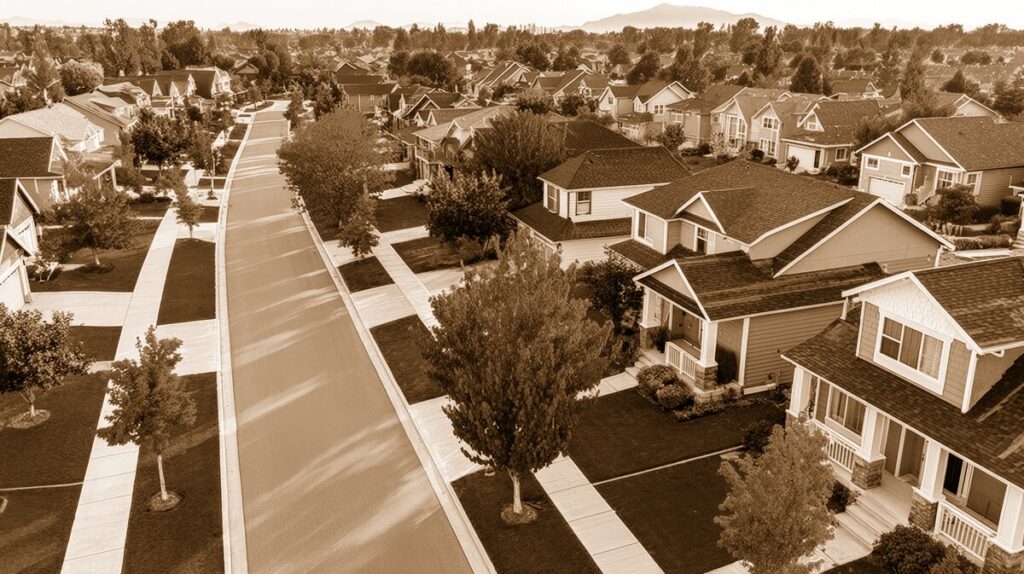
For longtime residents, the neighborhood’s history is visible not through grand historic mansions, but through its modest Cape Cod-style houses, mature trees, curving streets, and the everyday landmarks that have served generations of Bowie families.
How Heather Hills Got Its Name
The name “Heather Hills” appears to reflect the landscape and marketing language of mid-century suburban development. “Heather” evokes low-growing flowering plants and open countryside, while “Hills” suits Bowie’s gently rolling terrain. Unlike Belair, which clearly connects the development to the historic Belair estate, no widely documented record identifies a single person or family as the namesake of Heather Hills.
That uncertainty is part of the neighborhood’s charm. Heather Hills was created during an era when builders often chose names that suggested nature, calm, and elevation. The result was a name that promised something different from the busy city: fresh air, green surroundings, and a peaceful place to put down roots.
The name also fits the neighborhood visually. Even though Heather Hills is not mountainous, its gently varied grades and leafy residential streets give it a sense of separation from the traffic and commercial activity beyond the neighborhood.
The Levitt & Sons Legacy
The story of Heather Hills cannot be separated from the story of Levitt & Sons. The company became famous for building large-scale suburban communities with standardized home designs, planned streets, and family-oriented amenities. In Bowie, the Belair development introduced thousands of families to newly built homes within commuting distance of Washington, D.C., Baltimore, and Annapolis.
Heather Hills was somewhat distinct within the Belair plan because it was the only section built south of John Hanson Highway. Its location created a degree of separation from the other Belair communities, and that relative isolation helped lead to the construction of its own elementary school. A pedestrian bridge now provides a walking and bicycling connection over the highway, reinforcing Heather Hills’ link to the wider Belair neighborhood network. ([sah-archipedia.org](https://sah-archipedia.org/buildings/MD-01-033-0004?utm_source=openai))
The houses were designed for practical family life. Many featured compact footprints, Cape Cod forms, front-facing gables, and floor plans suited to young families entering the postwar housing market. What may have looked uniform in the 1960s has become distinctive with age: additions, landscaping, screened porches, new windows, and carefully maintained gardens have given individual homes their own personalities.
Heather Hills Elementary and Community Life
Heather Hills Elementary School has long been one of the neighborhood’s most important institutions. Its presence helped establish the community as more than a collection of houses. Children could attend school close to home, and parents met through school events, neighborhood gatherings, youth activities, and informal connections on the sidewalks and front lawns.
The school remains an important reference point for understanding the neighborhood’s development. In the early years, it represented the promise of planned suburban life: a nearby school, safe streets, modest homes, and enough open space for children to play. Over the decades, it also became a place where the neighborhood’s history was passed from one generation to the next.
Many residents remember Heather Hills through ordinary but meaningful experiences—walking along streets such as Heather Hills Drive and Heming Lane, riding bicycles across the pedestrian bridge, playing in neighborhood green spaces, or gathering with friends after school. These routines created the sense of familiarity that defines a settled community.
Streets, Green Space, and Everyday Landmarks
Heather Hills is characterized by residential streets with names beginning with “H,” a detail that gives the neighborhood a subtle identity of its own. The pattern is typical of Bowie’s planned developments, where street names helped distinguish one section from another while reinforcing the character chosen by the builder.
The neighborhood’s most visible landmark is arguably the pedestrian bridge over U.S. Route 50. It is both practical and symbolic. Practically, it provides a safer connection for walkers and cyclists. Symbolically, it links Heather Hills to Bowie’s larger Belair story, reminding residents that the neighborhood was planned as part of a broader community rather than as an isolated subdivision.
Nearby parks and open areas add to the neighborhood’s appeal. Heather Hills residents are within reach of Bowie’s extensive system of public parks, athletic fields, playgrounds, and walking routes. The broader city’s recreational resources—including Allen Pond Park and the Bowie-Crofton area’s greenways—help make the neighborhood attractive to families who value outdoor space as much as convenient access to shopping and schools.
From Farmland to Established Neighborhood
Before Bowie’s postwar development, much of the surrounding region was rural, with farms, wooded areas, and gently rolling fields. The railroad had established Bowie as a transportation center in the nineteenth century, but the city’s rapid residential growth came later. Bowie’s official history traces the community from its colonial roots through its railroad era and into the modern suburban expansion that reshaped the city after World War II. ([cityofbowie.org](https://www.cityofbowie.org/2813/History?utm_source=openai))
Heather Hills emerged during that transition. Its homes replaced portions of the open landscape, but the neighborhood retained many visual reminders of its rural setting. Mature trees line streets that once crossed undeveloped land. Backyards and small wooded edges provide habitat for birds and wildlife. The low-density layout leaves room for sunlight, shade, and changing seasons.
That balance between development and greenery is one reason Heather Hills has aged gracefully. It feels established without feeling frozen in time.
How Heather Hills Has Evolved
The neighborhood has changed in several important ways since 1965. The original homeowners have been joined by younger families, retirees, and residents who grew up in Bowie and later returned. Houses have been renovated and expanded, often preserving their mid-century silhouettes while adding modern kitchens, finished basements, energy-efficient systems, and updated outdoor spaces.
Transportation has also changed the neighborhood’s relationship to the rest of Bowie. The growth of U.S. Route 50, nearby commercial centers, and regional employment hubs made Heather Hills increasingly convenient for commuters. Bowie Town Center and other shopping areas brought new services within easy reach, while institutions such as Bowie State University and the University of Maryland Bowie Health Center became part of the wider community landscape. ([homes.com](https://www.homes.com/local-guide/bowie-md/heather-hills-neighborhood/?utm_source=openai))
Yet Heather Hills has not lost its original character. The streets remain primarily residential. The homes still reflect the practical optimism of the 1960s. The school, bridge, trees, and familiar routes still anchor daily life.
What Makes Heather Hills Special
Heather Hills is special because its history is written into ordinary places. It is found in the shape of a Cape Cod roof, the shade of an old oak tree, the walk to Heather Hills Elementary, and the view from the pedestrian bridge as traffic moves below.
It is also a neighborhood that illustrates Bowie’s larger story: a place where railroad history, farmland, planned development, and modern suburban life meet. Heather Hills may not have the oldest buildings in the city, but it represents an important chapter in Bowie’s heritage—the moment when a new generation of Maryland families made a home in a carefully planned community.
For residents, that history is not merely something to preserve in books. It lives in the streets, front yards, schools, and neighborly traditions that continue to make Heather Hills feel like home.